

General counsel vs corporate counsel vs head of legal is a question every seller to legal teams runs into, because the three titles sound alike and sit at very different levels. If you sell to this group, a corporate counsel email list filtered by title and company size helps each message reach the right desk.
This guide explains what each title usually means, how seniority stacks up and who tends to hold the money for legal spending. It draws on the 2026 ACC survey of top in-house lawyers, a legal spend benchmark and write-ups from consultants and vendors, and it ends with a four-week plan. Titles are not standardized, so every pattern here is a tendency, and we say so where the sources do.
TL;DR
Titles describe scope and rank follows company size
In the general counsel vs corporate counsel vs head of legal comparison, general counsel and head of legal can both name the top lawyer, depending on company size and culture. Corporate counsel usually names a specialist or mid-level role. Read each title next to company size before you decide who sits above whom.
Budget authority rarely sits with one person
Legal spending involves the top lawyer, an operations lead, finance, IT and procurement, and one small survey found only 22% of general counsel controlled a separate technology budget. A message aimed at a title alone can miss the person who starts, approves or blocks a purchase.
Match the message to the role in the purchase
Map each title to its part in a buying decision, then write one message per role. The plan near the end sorts a contact file by title, tests one segment and reviews replies each quarter, since titles and structures keep shifting.
What Each Title Usually Means
The general counsel vs corporate counsel vs head of legal confusion starts with in-house titles that vary by seniority, responsibilities, and company size. Here are six key distinctions that explain how these roles typically differ:
- General counsel (GC): The most senior lawyer in a company, responsible for leading the legal function and overseeing legal matters across the organization.
- General counsel responsibilities: At smaller companies, the GC may work alone, while larger organizations typically have legal teams reporting to this position.
- Chief legal officer (CLO): An executive-level legal leader positioned alongside other C-suite executives. The ACC’s 2026 survey reports title adoption at 34%.
- Head of legal at startups: Usually a legal generalist responsible for establishing the legal function and managing a broad range of legal responsibilities.
- Head of legal at larger companies: May oversee a specific legal practice area, department, or geographic region rather than lead the entire function.
- Corporate counsel: Typically handles governance, M&A support, and commercial matters. Juro associates this specialist role with approximately three to seven years of experience.
Where Deputy and Associate Titles Fit
Below the top role, companies add layers. Juro’s ladder puts the deputy general counsel next, followed by the associate general counsel and the assistant general counsel. Each reports upward toward the top lawyer, though how much each one owns varies, and not every company has every layer. Juro treats legal operations as a function that cuts across levels, so a person in that lane can hold a title at almost any rung. Give it its own lane in your title map.
When a Company Has Both Titles at the Top
Most companies pick one title for the top lawyer, but some use two. Major, Lindsey & Africa’s article on co-existing legal titles says the general counsel tends to run the department and work with the board, while the chief legal officer title fits where peers carry “Chief” titles. It describes exceptions for a large department of roughly 50 to 100 or more lawyers, a succession plan and a retention move. The firm adds that it doesn’t recommend the setup for 98 percent of legal departments, so you will rarely see both. That keeps most general counsel vs corporate counsel vs head of legal comparisons simple, because one title usually sits at the top.
How General Counsel, Corporate Counsel, and Heads of Legal Work Together
Legal departments often divide responsibilities across several positions, making collaboration essential. The general counsel typically oversees legal strategy, while the head of legal manages assigned teams or practice areas. Corporate counsel handles specialized matters, including contract reviews, compliance questions, and business transactions.
When evaluating new legal services or technology, these professionals may contribute at different stages. Corporate counsel identifies operational challenges, the head of legal assesses departmental requirements, and the general counsel considers broader business priorities. Operations leads, procurement, and finance may also participate in the approval process. Understanding the general counsel vs corporate counsel vs head of legal relationship helps businesses identify relevant stakeholders without relying solely on job titles. Reviewing responsibilities, reporting structures, and purchasing authority provides a clearer picture of who influences decisions and who holds final approval.
Title, Seniority and Budget Authority Compared
The table below is our reading of the sources, so read the last column as a typical pattern, since companies vary.
|
Title |
Typical seniority |
Usually reports to |
Role in a purchase |
|---|---|---|---|
|
Chief legal officer |
Top of the function, executive team |
CEO |
Senior voice on legal spend and strategy |
|
General counsel |
Top lawyer, often at or near the executive table |
CEO |
Key decision-maker on legal purchases |
|
Deputy general counsel |
Second rung |
General counsel |
Shapes scope for a practice area or unit |
|
Associate general counsel |
Senior lawyer in one area |
General counsel |
Recommends tools and outside help |
|
Head of legal |
Varies by company size |
CEO or another executive |
Often buyer and user at smaller companies |
|
Corporate counsel |
Specialist, mid-level |
A senior lawyer in the department |
Daily user who influences the choice |
|
Head of legal operations |
Process and technology lead |
Varies |
Often starts the purchase and builds the case |
Titles repeat across companies with different meanings, so check size before you rely on any row. Finance, procurement and IT sit outside the legal titles but often hold the final approval, which the next section covers.
Who Holds the Budget
Budget control is split, and the public data is thin. No source measures budget by title across general counsel vs corporate counsel vs head of legal, so treat every figure here as a signal. Coverage of a Radiant Law survey of 53 general counsel found that only 22% had a separate budget for process and technology investments, though 78% called such investment a compelling need. The sample is small and the coverage gives no date. Even so, it hints that the person who wants a tool may need someone else to fund it.
Legal Operations Starts Many Purchases
Brightflag, a legal spend software vendor, says an operations lead often starts a legal technology purchase and builds the business case. It lists the general counsel as the key decision-maker, with finance deciding whether the budget is approved and IT reviewing integration and security. Procurement negotiates price, and the attorneys who will use the tool can sway the outcome. Treat the stakeholder guide for buying legal technology as a useful map, since it contains no data.
How Company Size Changes the Same Title


The general counsel vs corporate counsel vs head of legal comparison shifts with company size, because legal titles do not always reflect the same level of seniority or responsibility across organizations. Here’s how company size and reporting structures influence these roles:
- Legal counsel at startups: May be the first lawyer hired, managing contracts, compliance, and other legal responsibilities.
- Legal counsel at enterprises: Often handles a specialized legal area while reporting to senior lawyers within a larger department.
- Head of legal at startups: May oversee the entire legal function, including legal strategy, operations, and compliance.
- Head of legal at enterprises: May lead a specific legal team, practice area, or region within a broader legal structure.
- Company size matters: The same legal title can represent different responsibilities and seniority levels depending on organizational size.
- Reporting structure matters: Reviewing job titles, company size, and reporting lines helps identify actual responsibilities and authority.
Why Lean Legal Teams Weigh Each Purchase
Spend is tight overall. A Major, Lindsey & Africa benchmark of 576 legal departments in 45 countries put legal spend at 0.43% of revenue in 2026, a six-year low, with a median of 3 lawyers for every billion dollars in revenue. Lean teams and tight spend suggest each purchase gets a close look, so expect a longer path from first reply to signed order.
How Budget Talks Differ by Role
A general counsel usually frames spend as risk and capacity. The ACC survey lists operational efficiency as the top strategic initiative, at 53%, so a pitch that frees lawyer hours speaks to a stated priority. Budget authority gets more specific lower down. In some companies a deputy owns the outside counsel spend for a practice area, while legal operations owns the tool budget and the vendor relationship. Ask the first reply who signs, then write to that person.
Title Mistakes That Waste Sends
Four slips in general counsel vs corporate counsel vs head of legal outreach cost the most replies:
- Treating head of legal as junior: At a startup it may be the top legal role.
- Assuming one title always outranks another: Some companies use only one of the top titles.
- Sending to every lawyer in the department: One message to ten people can look like a mass send.
- Skipping the operations lead: They often start purchases and then hand the decision up.
If you want help turning a title map into a steady flow of replies, our team can plan the outreach with you through B2B lead generation services for your target audience.
Signals That Show Who Really Decides
Titles are a starting point. Team size also helps: a department of 3 lawyers has fewer layers than one of 30, so the top lawyer probably holds the pen. Job postings, conference speaker lists and press releases show who leads technology projects, and a short note on each account keeps the next message pointed at the right person. Update those notes after every reply, since the best clue is often a line the contact wrote.
How to Match a Title to Your Offer
Work through four checks on general counsel vs corporate counsel vs head of legal before you choose who gets the first message.
-
What you sell decides who gets the first message
Spend-heavy products, such as e-billing, need the top lawyer and finance. Workflow tools for contracts or matters need the operations lead and the lawyers who use them. Decide which group feels the pain first.
-
Company size changes which legal title to target
A small company may have one lawyer who does everything, while a large one has layers. For small accounts, aim at the top legal title. For large accounts, aim at the deputy general counsel or associate general counsel who owns the area.
-
The reporting line shows how much weight a title carries
A title with a reporting line to the CEO usually carries more weight than the same title reporting to a finance chief. With 84% of top lawyers now reporting to the CEO, ask your data source to include it when it can.
-
Separate messages for each legal role
A general counsel cares about risk, an operations lead about efficiency and cost, and a finance contact about return. Send each group a short message built around its concern, and track replies by title.
Reaching the Legal Team After You Map the Titles
Once you know the role, outreach works best with a short message that names the problem that role owns. A team offering email marketing services for sending, tracking and list hygiene can run each campaign while you refine the message by title. Keep each send short, name one problem and make the next step easy to take.
What a Title Can’t Tell You
Even the general counsel vs corporate counsel vs head of legal split cannot tell you who holds the budget today. Companies reorganize, reporting structures change and some people hold two titles. Use titles to narrow the list, then confirm influence from replies and meetings. If your offer also suits the wider audience on a corporate attorney email list, test the two segments separately.
What to Ask for in Legal Contact Data
- The title exactly as written, plus a standard seniority level that groups similar titles.
- Company size and industry, so one title can be read in context.
- A flag for operations roles, since they often start purchases.
- A law practice email list for outside firms that serve these companies, when you also sell to them.
What Counts as a Good Reply
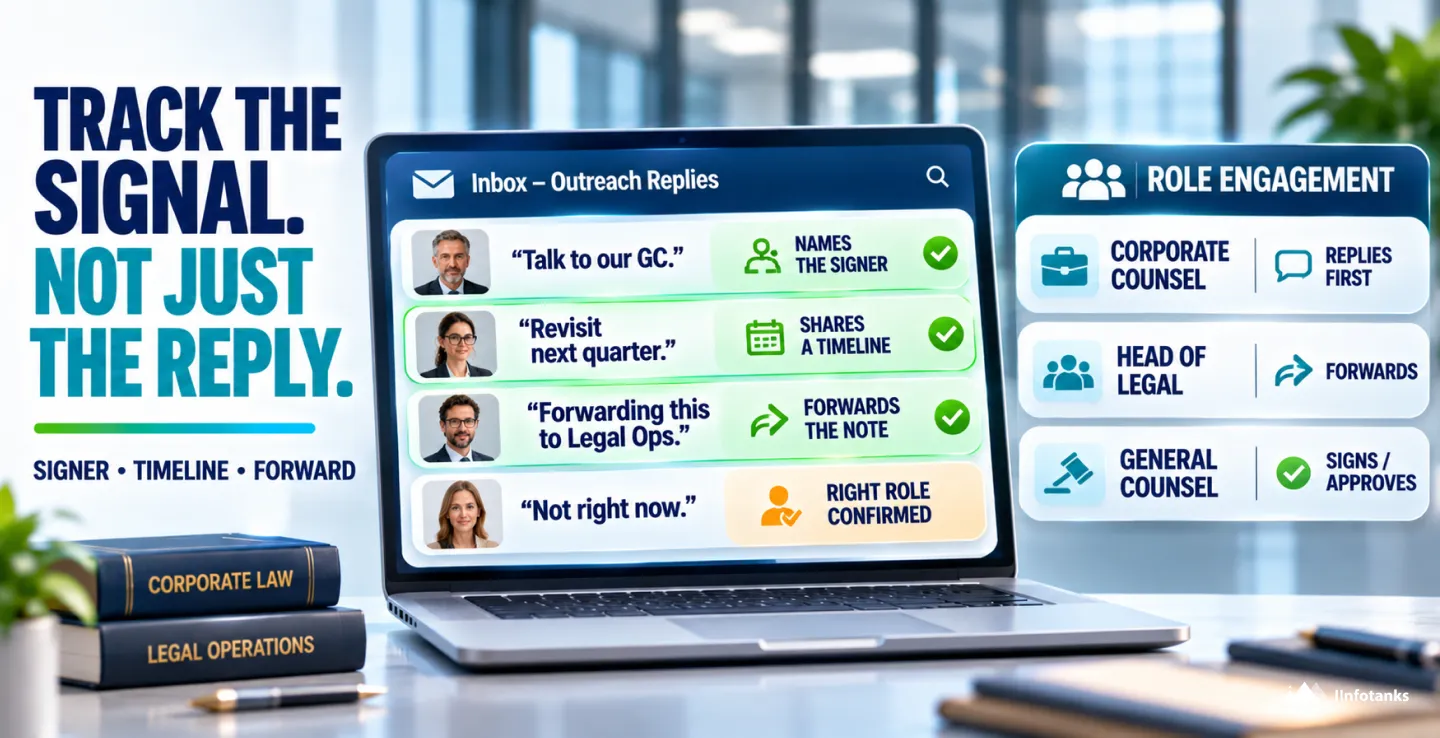
Count a reply as progress when the contact names who signs, shares a timeline or forwards your note. A polite “not now” from the right role still helps, because it confirms the title map. Log each reply by title so the quarterly review shows which roles engage. After two or three cycles you will know how the general counsel vs corporate counsel vs head of legal split plays out for your offer: which titles answer first, which ones pass the note along and which ones never respond.
What Legal Team Changes Reveal About Business Needs
Legal departments evolve as companies grow, enter new markets, and face different operational demands. These changes can help identify relevant legal professionals and understand their responsibilities before making contact.
- First legal hire: A newly appointed general counsel may need support with contracts, compliance processes, and external legal services.
- Legal team expansion: Hiring additional corporate counsel may indicate growing workloads, more specialized responsibilities, or increased contract activity.
- Operations hiring: Adding operations professionals may reflect a greater focus on workflow automation, reporting, and legal technology.
- Business expansion: Entering new markets may create additional requirements for regulatory compliance, commercial agreements, and legal coordination.
- Leadership changes: Appointing a new top lawyer or head of legal may introduce new departmental priorities and reporting structures.
- Specialist recruitment: Hiring lawyers for privacy, employment, or corporate transactions may indicate where the legal department needs additional expertise.
These developments provide useful context, but they do not confirm purchasing intent. Reviewing each professional’s responsibilities and organizational position helps identify the most relevant contacts.
Frequently Asked Questions
- What is the difference between a general counsel and a corporate counsel?
A general counsel heads the legal function. Corporate counsel is usually a specialist role covering governance, M&A support and commercial work, below the top job.
- Is a head of legal the same as a general counsel?
Sometimes. At a startup, a head of legal may be the top lawyer. At a larger company, it can mean a narrower role.
- Who is more senior, a chief legal officer or a general counsel?
Both can name the top lawyer. The chief legal officer title is more common where peers carry “Chief” titles, and the ACC says 34% of respondents use it.
- What is a deputy general counsel?
A deputy general counsel sits on the rung below the top lawyer, according to Juro’s title ladder, and reports upward.
- What does an associate general counsel do?
An associate general counsel ranks below the deputy and above the assistant general counsel, with scope that varies by company.
- Who has budget authority for legal purchases?
It varies. The top lawyer often owns the spend, but finance approves budgets and one small survey found only 22% of general counsel control a technology budget.
- Who decides on legal technology purchases?
An operations lead often starts the process, the general counsel decides and finance, IT and procurement review it, per one vendor’s guide.
- What share of top lawyers report to the CEO?
The ACC’s 2026 survey says 84%, a record high, among 1,049 participants from 43 countries.
- Why does the reporting line matter?
A title with a reporting line to the CEO usually carries more weight, so ask for it alongside the title when you source contacts.
- What is legal operations?
It is a function that manages legal department processes, spend and technology, and Juro says it cuts across seniority levels.
- How much do companies spend on legal?
A 2026 benchmark of 576 legal departments put total legal spend at 0.43% of revenue, a six-year low.
- Should I email every lawyer at a company?
No. Choose the role that owns the problem, send one message and add a second role only after the first test shows interest.
- Do titles mean the same thing at every company?
No. A legal counsel at a Series A company may do everything, while the same title at a large enterprise may cover one area.
- How often should I refresh legal contact data?
Recheck each quarter, since titles and company structures change and old records lose accuracy.
- What is a good first step for targeting legal titles?
Pick one company-size band, request counts by title and write one message for the role that owns your problem.