

Anyone working out how to sell to retailers, restaurants and hotels runs into the same question early: who actually says yes? In some chains it’s a buyer at headquarters, in others it’s the manager at the store or front desk, and many companies split the decision between both. A verified retail email list puts names and roles in front of you, but the right message depends on which side of that split you’re talking to.
This guide is for sales and marketing teams that supply products, services or software to businesses with many locations. It explains how buying works in retail, restaurants and hotels, who holds the authority at headquarters and at the store, and how to reach each group. A four-week plan near the end puts the steps in order.
TL;DR
One chain with two layers of buyers
Multi-location businesses split buying between headquarters and the individual store, restaurant or hotel. Headquarters sets standards, approved vendors and contracts, while local managers handle daily needs and influence what gets bought. The split changes by chain, by category and sometimes by purchase size.
The risk is pitching the wrong layer
A store manager can’t approve a chain-wide contract, and a headquarters buyer rarely knows what one location needs on a Tuesday. Pitch the wrong layer and your message lands with someone who can’t act, or with someone who acts on a problem you never described.
A layer-by-layer approach
Map each target chain’s decision layers, then match your message to each one. Use headquarters contacts for approvals and contracts, local contacts for pilots and proof, and verified data to reach both. The four-week plan near the end of this guide shows the order.
How Multi-Location Businesses Make Buying Decisions
The National Retail Federation counts about 4.6 million retail locations in the US using 2022 data. When planning how to sell to retailers, identify who sets purchasing rules and who makes decisions at each location.
Independent owners: Direct purchasing decisions
At a small independent business, the owner often chooses suppliers and approves purchases. Speak to the owner about the location’s needs, budget and day-to-day operations. There may be no separate headquarters approval process.
Headquarters buyers: Standards and contracts
Category buyers, procurement leads, brand managers and operations executives may set contracts, pricing terms, approved vendor lists and product standards across a chain. They want to know whether you can serve every location consistently as demand grows.
Franchise and management teams: Brand rules
Franchise systems and hotel management companies may set requirements that individual locations must follow. Before approaching a site, find out which products or suppliers need approval at this level and which choices remain with the local team.
Location teams: Daily use and local needs
Store and property managers work within the rules set above them, but they often know where service or supply falls short. Ask what they can approve locally and what must go through headquarters or management.
Store-Level Buyers: Daily Needs and Local Influence
Store-level buyers are the store managers, restaurant general managers and hotel department heads who handle day-to-day purchases within set limits. They also influence bigger decisions, since headquarters listens when a location asks for something or complains about a supplier. A verified general managers email list reaches the people who run individual locations. Treat them as testers and advocates, since they can prove your product works even when they can’t sign a contract.
Retail: Where Category Buyers Meet the Shelf
Anyone learning how to sell to retailers meets category buyers first, since they decide which products earn shelf space and on what terms. Category buyers want to know how a product helps their category, which usually means sales speed, margin and value that shoppers notice.
Buyers at the store may control local orders, restocking or placement inside a layout set at headquarters. Ask the headquarters buyer which decisions stay local before you plan any store visits.
Selling to Restaurant Chains: Franchisors, Franchisees and Operators
The National Restaurant Association expects $1.55 trillion in restaurant and foodservice sales in 2026 across more than 1 million outlets. That scale means selling to restaurant chains involves a franchisor, a corporate supply team and many local operators.Corporate teams set menus, equipment standards and supplier lists. Operators handle what’s left, such as local services, smallwares and community marketing.
Approved Supplier Programs and Why They Matter
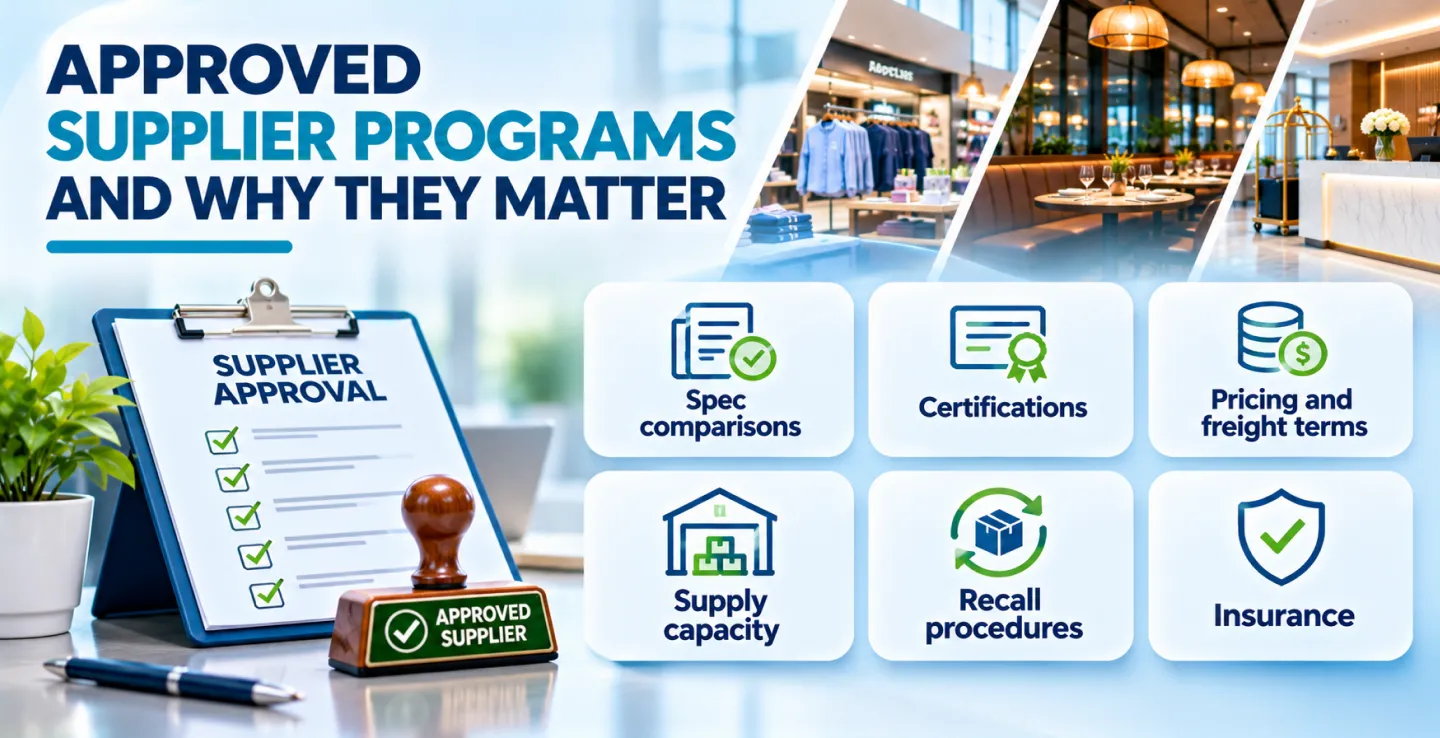
In franchise systems, the franchisor usually designates which suppliers franchisees may use. A franchise law firm explains that these rules are spread across the franchise disclosure document, the franchise agreement and the operations manual. A supplier that isn’t on the list typically submits a package showing it meets brand specifications, including:
- Spec comparisons
- Certifications
- Pricing and freight terms
- Supply capacity
- Recall procedures
- Insurance
Approvals are often time-limited or tied to specific products, locations or volumes, so start the conversation early.
Why Selling to Restaurant Chains Takes Two Sales
A chain deal usually means one sale to corporate for approval and a second to operators for adoption. Skip the first and you can’t scale, and skip the second and the product sits unused.
Independent restaurants decide faster because the owner is often in the room. Plan a short, direct path for them and a longer, staged path for chains.
Selling to Hotels: Owners, Managers and Brands
Franchises account for nearly 60% of US hotels, according to AHLA figures reported by Lodging Magazine. Many properties therefore answer to an owner, a management company and a brand at once. Selling to hotels means respecting all three. The brand sets standards, the management company runs operations and the owner protects the asset.
What Property-Level Teams Care About When Selling to Hotels
When you’re pitching a hotel, the property team cares about guest experience, staff time and daily operations. Owners and management companies think about revenue per available room, productivity, brand standards and asset protection.Speak to both sets of concerns. A feature that saves a housekeeper ten minutes matters more when you can also show what it does for revenue or costs.
Hospitality Decision Makers: Who Can Actually Approve
Hospitality decision makers don’t always match their titles. A hotel general manager may influence a purchase without holding final authority, and a pitch made only at the property can stall.
One hospitality trade commentary says decisions roll up to the management company and then to ownership, and that vendors often need approval at that level. Ask early where approval lives, then plan two conversations, one at the property and one above it.
Mapping Hospitality Decision Makers Before You Call
Build a simple map of who decides for each target: owner, management company, brand and property. Public sources help, including the property’s website, the brand’s franchise pages and press releases about management changes.Mark each box as confirmed or guessed. A guess is a good reason to ask the property contact who else needs to sign off.
Comparing the Three Industries
The table below shows where authority tends to sit before you decide how to sell to retailers, restaurants and hotels. Chains differ, so treat it as a starting brief and confirm each account.
Industry | Headquarters decides | Store or property decides | Best first contact |
|---|---|---|---|
Retail | Category buyers set ranges, vendors and terms | Local orders, restocking and placement within set layouts | Category buyer, then store manager for pilots |
Restaurants | Franchisor or corporate sets approved suppliers and standards | Operators handle local supplies within those rules | Corporate supply team, then operators |
Hotels | Owner, management company and brand set standards and contracts | General manager and department heads run daily needs and influence choices | Management company, then property manager |
If hotels are your main target, a hotels and motels email list gives you property-level contacts to pair with management company names.
What Cost Pressure Means for Your Pitch
AHLA’s 2026 report says hotel operating costs are rising about four times faster than revenue, with insurance up 111% from 2019 to 2025. Restaurants face their own squeeze, with the National Restaurant Association forecasting real sales growth of only 1.3% in 2026. Buyers under that pressure listen for a clear business case, and that holds whether you are learning how to sell to retailers or to hotels. Show how you save money, protect revenue or reduce risk, and back it with a number or a customer story. Generic time-saving claims are common, so show the result in dollars, hours or complaints avoided.
Roles to Look For in Retail Buyer Contacts
Useful retail buyer contacts include these roles, and each sits at a different point in the decision:
- Category buyers
- Merchandise planners
- Procurement directors
- Store operations leaders
- District managers
- Store managers
Match the role to your goal when you work out how to sell to retailers. A category buyer can open a listing, a district manager can open several stores, and a store manager can approve a trial.
Building Retail Buyer Contacts That Hold Up
Strong records carry a company name, a location type, a role, a level and a verified email. The level matters most, since a record that says “manager” tells you nothing about whether the person sits at headquarters or in a store. Tag every record as headquarters, regional or location, and refresh the tags each quarter. A verified restaurant email list works the same way, with corporate and operator contacts kept in separate groups.
Using a Store Pilot to Open Headquarters Doors
When you plan how to sell to retailers with many stores, a small test at one or two locations can give decision makers at headquarters the proof they want. Ask a friendly store manager or property manager to try your product for a set period, then record the results. Agree on what success looks like before the pilot starts, such as time saved or orders placed. Take those results to headquarters with a short case summary. Corporate teams respond to evidence from their own locations more readily than to claims from a vendor.
Timing Your Outreach to Each Industry’s Calendar
Planning cycles differ by industry:
- Retail: Seasonal assortments are planned months ahead, so a pitch for a holiday product needs to arrive well before the season.
- Hotels: Planning follows annual budgets.
- Restaurants: Planning follows menu and promotion cycles.
Ask each contact when decisions get made. A note that arrives as planning begins gets read, and the same note a month after the decision waits for next year.
Reading the Org Chart From the Outside
Titles tell you the layer. “Director of Procurement” points to headquarters, “Regional Manager” points to the middle and “General Manager” points to a single location.When titles are vague, ask the contact. One question, such as “Who else weighs in on this?”, can save weeks of guessing and often leads you straight to the real approver.
Messages That Fit Each Layer
Write one note for headquarters and one for the store. The headquarters note covers scale, compliance and contract terms, while the store note covers ease of use and support. Subject lines can say so plainly. “Supplier approval packet for your franchise system” suits a corporate reader, and “A simple way to cut weekly restocking time” suits a store manager.
Where Multi-Location Sales Go Wrong
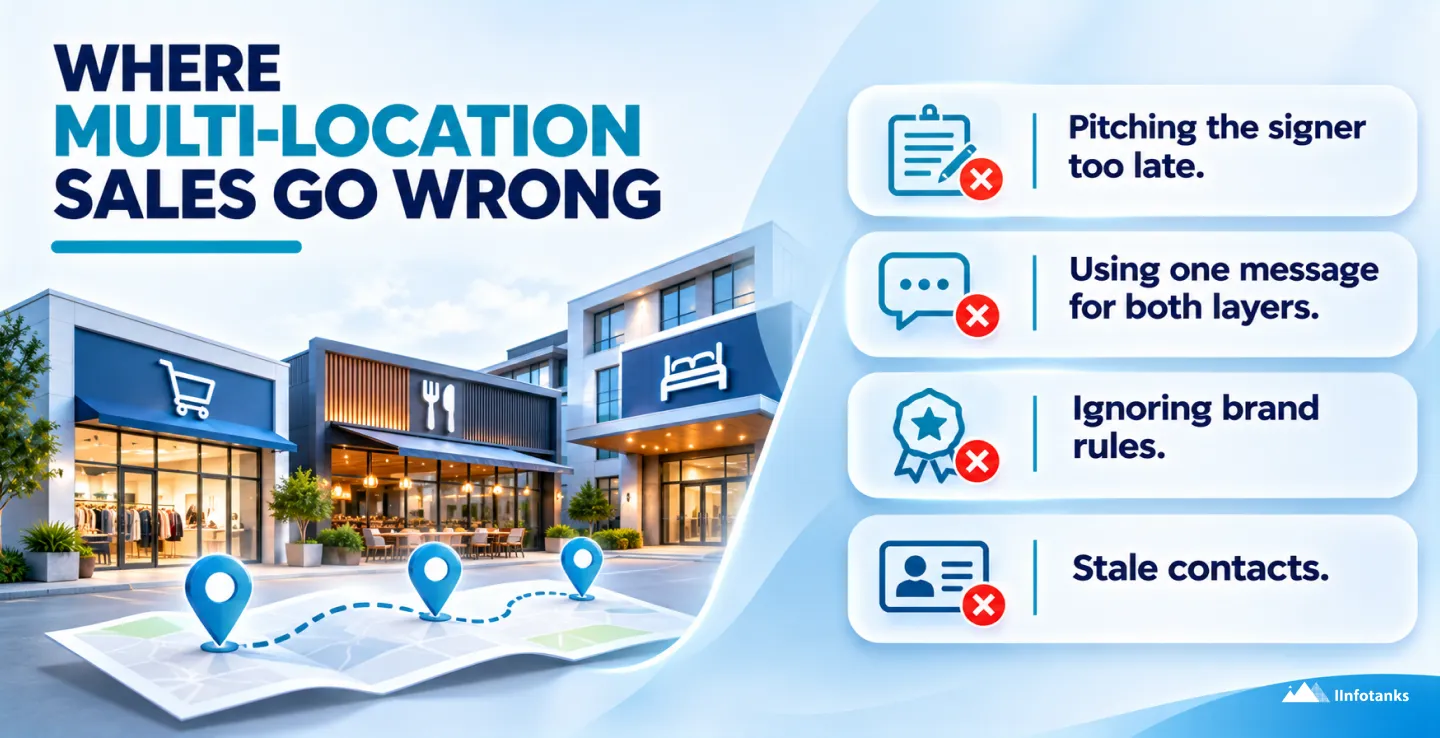
Most stalled deals trace back to four habits:
- Pitching the signer too late: A store loves your product, then headquarters says no because nobody spoke to the approver.
- Using one message for both layers: A contract pitch bores a store manager, and a how-to note bores a buyer.
- Ignoring brand rules: Franchise and hotel brands can block a purchase that doesn’t meet their standards.
- Stale contacts: Buyers and managers move often, and an old record sends your pitch to the wrong desk.
Most of these misses start with missing data, so build a layered list before you decide how to sell to retailers, restaurants or hotels.
Keeping Outreach Compliant
CAN-SPAM applies to every commercial email, and each send needs:
- Honest sender details
- A postal address
- An opt-out you honor within 10 business days
Keep a suppression list for each campaign, apply opt-outs by person and review the list before every send to a chain. Franchise systems may limit what operators can accept from vendors. Ask before offering gifts or samples to anyone at a location.
A Four-Week Layered Outreach Plan
Week | What to do |
Week 1 | Pick one industry and ten target chains, then map who decides at headquarters and at the location. |
Week 2 | Write one note for each layer. |
Week 3 | Send to a small sample of both and read the replies. |
Week 4 | Line up a pilot at a friendly location and prepare a short case summary for headquarters. |
Review the map every quarter, since roles and owners change and your view of how to sell to retailers will change with them. To compare other buyer groups, browse the full set of industry email lists.
Frequently Asked Questions
- Who makes buying decisions at retail chains?
It varies. Category buyers at headquarters often decide which products and terms a chain uses, while store managers may handle local orders and placement within set rules.
- What is the difference between store-level and headquarters buyers?
Corporate teams set contracts, standards and approved vendors for the whole chain. Store-level buyers manage daily needs at one location and influence larger decisions.
- How do I reach headquarters buyers?
Use verified contact data tagged by role and level, and write a note about scale, compliance and contract terms.
- Why do store-level buyers matter if they can’t sign?
They can run pilots, give feedback and support your case. Headquarters often listens to its own locations.
- How does selling to restaurant chains differ from selling to independents?
Chains usually involve a franchisor or corporate team that sets approved suppliers and standards, while independent owners decide for themselves.
- What is an approved supplier program?
It’s a franchisor’s list of vendors that franchisees may buy from. Getting added usually means submitting specifications, certifications, pricing and insurance details.
- What does selling to hotels involve?
Many hotels answer to an owner, a management company and a brand, so you may need approval at more than one level. AHLA figures reported by Lodging Magazine put franchises at nearly 60% of US hotels.
- Who are the hospitality decision makers?
Property managers influence purchases, but decisions often roll up to a management company and then to ownership.
- How many retail locations are there in the US?
The National Retail Federation counts about 4.6 million, based on 2022 data.
- How big is the restaurant industry?
The National Restaurant Association expects $1.55 trillion in sales in 2026 across more than 1 million outlets.
- How should I build retail buyer contacts?
Record the company, location type, role, level and a verified email for each person, and refresh them each quarter.
- Should I pitch the store or headquarters first?
Start by learning where approval sits. Often the best path is a store pilot paired with a headquarters conversation.
- How do I show value to cost-pressured buyers?
Tie your offer to saved money, protected revenue or reduced risk, and back it with a number or customer story.
- Does CAN-SPAM apply to these emails?
Yes. Every commercial send needs honest sender details, a postal address and an opt-out honored within 10 business days.
- How often should I update my account map?
Review it each quarter, since buyers, managers and owners change.